


Thermal performance is no longer a differentiator in aluminium. It’s a requirement.
Regulations are tightening, expectations are increasing, and fabricators are under growing pressure to deliver lower U-values across their product range. For many, that’s creating a challenge.
“U-values are hugely important for the industry right now,” says Terence Ledwith-Lyons, Head of Strategic Sales at Deceuninck Aluminium. “But a lot of systems are already operating at the very edge of their performance.”
As standards continue to evolve, those systems risk falling short without significant changes to specification.
And for many, that has meant turning to triple glazing.
The problem with defaulting to triple glazing
Triple glazing has become a common solution for improving thermal performance. But it comes with trade-offs.
Increased glass costs. Heavier units. More complex handling. Greater strain on fabrication and installation.
“There’s a tendency to see triple glazing as the default answer,” Terry explains. “But that brings additional cost and complexity into the process.”
Those impacts are felt across the entire operation.
Heavier units can slow down production, require more careful handling in transit, and make installation more demanding on-site. Over time, that affects efficiency, labour, and overall profitability.
“It’s not just about the cost of the glass,” Terry adds. “It’s about everything that comes with it.”
Designing performance into the system
Deceuninck Aluminium has taken a different approach.
Rather than relying on thicker, heavier glazing to achieve compliance, the Decalu system has been engineered to deliver strong thermal performance through its profile design.
“Our focus has been on building that performance into the system itself,” says Terry. “So you’re not dependent on triple glazing just to meet the required standards.”
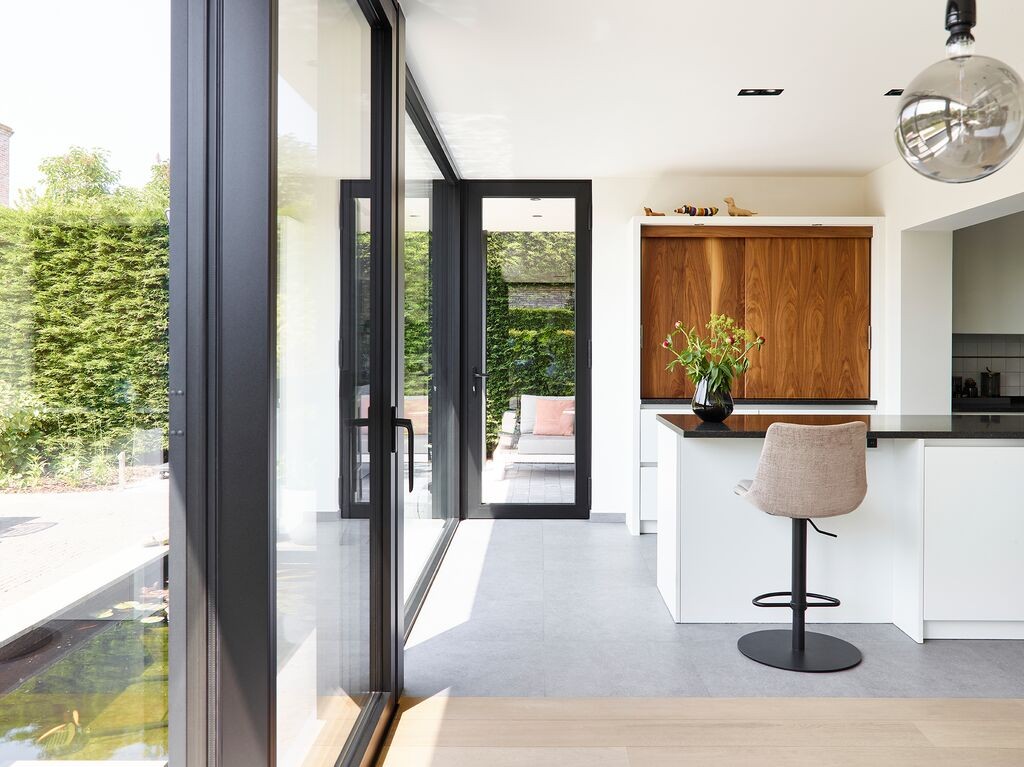
The result is a system that can achieve impressive U-values using standard double glazing.
For example, Decalu can deliver U-values of around 1.2 W/m²K with a standard double-glazed unit, performance that would typically require triple glazing in many competing systems.
“That’s where it becomes a real advantage,” Terry explains. “You’re achieving the performance you need, but without adding unnecessary cost or complexity.”
Reducing cost, weight, and complexity
Removing the reliance on triple glazing has immediate commercial benefits.
Glass is one of the most significant variable costs in any window or door. Reducing the need for triple glazing helps control that cost at source.
At the same time, lighter units are easier to handle in the factory, simpler to transport, and quicker to install on site.
“It’s an immediate win,” says Terry. “You’re reducing glass cost, reducing weight, and simplifying the whole process.”
There are sustainability benefits, too.
Less glass means less material usage, lower transport weight, and a more efficient overall product, something that is becoming increasingly important across the supply chain.
“It’s a much more balanced approach,” Terry adds. “You’re not over-engineering the solution just to hit a number.”
A smarter route to future compliance
With further changes to building regulations expected, fabricators need systems that can keep pace without forcing major changes to their production model.
That’s where optimised performance becomes critical.
“A lot of the industry is going to face challenges as regulations tighten,” Terry says. “If your current system can only just meet today’s standards, that’s a risk moving forward.”
By delivering strong thermal performance within a double-glazed specification, Decalu offers a more future-ready solution.
It allows fabricators to stay compliant without increasing product complexity or cost.
“You shouldn’t have to completely change the way you manufacture just to keep up with regulation,” Terry explains. “It needs to be commercially sensible as well.”
Performance that works commercially
Ultimately, thermal performance is only valuable if it works in practice.
“It’s easy to focus purely on the numbers,” Terry concludes. “But those numbers have to work for the fabricator, the installer, and the homeowner.”
By combining strong U-values with a more efficient specification, Decalu delivers a solution that balances performance with practicality.
Because in today’s aluminium market, future-proofing isn’t just about achieving lower U-values.
It’s about doing it in a way that protects cost, simplifies production, and supports long-term growth.
For more information about Deceuninck’s product and service offer, please call 01249 816 969, email deceuninck.ltd@deceuninck.com, or visit www.deceuninckaluminium.co.uk.